

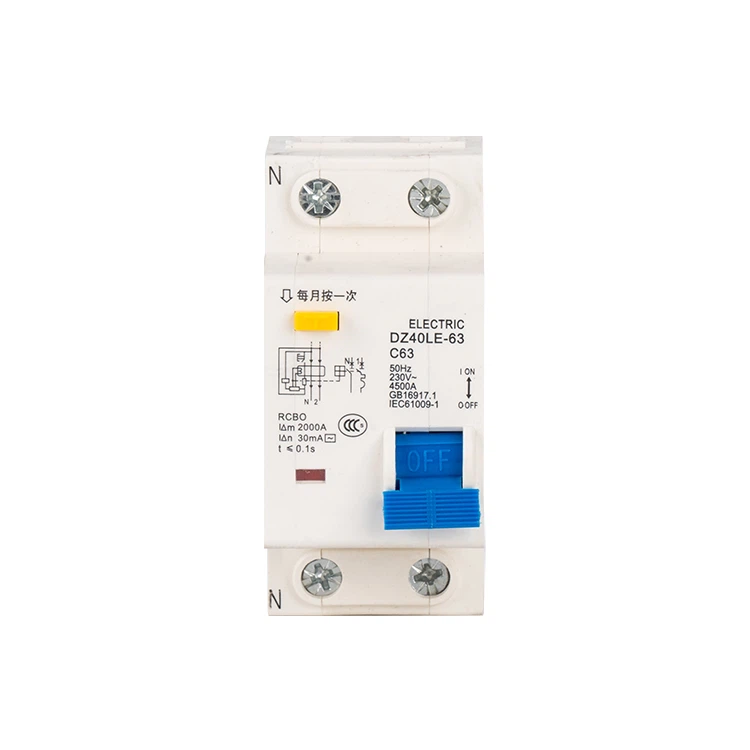
Residual Current Circuit Breakers: The Unsung Heroes of Electrical Safety
In the intricate world of electrical safety, residual current circuit breakers (RCCBs) play a crucial role in protecting lives and property from the dangers of electrical faults. RCCBs, often known as earth leakage circuit breakers, are specialized devices designed to detect and interrupt fault currents to ground, providing an additional layer of safety for electrical systems.
Introduction to RCCBs
RCCBs are devices that monitor the imbalance between the current flowing into and out of an electrical circuit. In a properly functioning system, the current flowing through the live and neutral conductors should be equal, with no current flowing to ground. However, when a fault occurs, such as a damaged cable or an appliance with a faulty earth connection, current may leak to ground, creating a potentially hazardous situation. RCCBs are designed to detect this imbalance and trip the circuit, preventing damage to equipment and reducing the risk of electrical shock or fire.
Working Principle of RCCBs
RCCBs operate on the principle of residual current detection. They monitor the current flowing through the live and neutral conductors of a circuit and compare it to the current flowing to ground. If the difference between these currents exceeds a predetermined threshold, indicating a fault, the RCCB trips the circuit, disconnecting the power supply. This rapid interruption of fault currents significantly reduces the risk of electrical accidents.
Types of RCCBs
RCCBs are available in different types and configurations, depending on the specific requirements of the electrical system. Common types include:
Single-pole RCCBs: These protect individual circuits or appliances, monitoring current in one phase and tripping if a fault is detected.
Multi-pole RCCBs: Used for protecting multiple circuits or entire distribution boards, monitoring current in all phases and tripping the entire system if a fault is detected.
Combined RCCBs: These integrate RCCB functionality with other protections like overcurrent or surge protection, offering comprehensive safety solutions.
Advantages of RCCBs
Using RCCBs in electrical systems provides several advantages:
Enhanced safety: RCCBs add an extra layer of protection against electrical faults, reducing the risk of shock, fire, and equipment damage.
Fast response: RCCBs trip circuits within milliseconds of detecting faults, minimizing hazardous conditions.
Easy installation and maintenance: RCCBs are straightforward to install and maintain, requiring minimal effort and expertise.
Compatibility: Available in various types and configurations, RCCBs suit different electrical systems, from residential to industrial applications.
Conclusion
Residual current circuit breakers are vital components of electrical safety systems, protecting against electrical faults by detecting and interrupting fault currents to ground. With their rapid response, ease of installation, and compatibility across systems, RCCBs are indispensable for ensuring electrical installations' safety worldwide.

Hot Tags: residual current circuit breakers, China residual current circuit breakers manufacturers, suppliers, factory, electronic plastic case circuit breaker, Residual Current Operated Circuit Breaker, Rccb Residual Current Circuit Breaker, moulded case circuit breaker, Residual Circuit Breaker, Molded Case Breakers


