

Automatic Transfer Switch
Why Choose Us
Business philosophy
The company always adheres to the business philosophy of "survive by quality, develop by technology, and achieve efficiency by management", and meets the current and future needs of customers with high-quality electrical products and services.
Rich industry experience
The company has been continuously upgraded through diversified sales products and services over the years, and has been praised by the majority of users! And enjoy a good reputation and credibility among consumers, and with a number of supporting manufacturers and agents to establish long-term stable cooperative relations.
24-Hour Service
Our dedicated 24-hour online support ensures prompt responses, providing you with an excellent shopping experience. Feel free to reach out with any questions at any time.
Fast delivery time
We have optimized production processes and supply chain management to achieve fast delivery times. With our advanced production scheduling system, we are able to accurately predict production cycles and respond quickly to order needs.
What is Automatic Transfer Switch
An Automatic Transfer Switch (ATS) is a “smart” microprocessor-driven instrument that, as its name suggests, shifts from one power source to another for continuous energy delivery. This guarantees that your appliances will not shut down whenever there is a power outage in your area.
-
![Dual Power Automatic Transfer Switch]() Dual Power Automatic Transfer SwitchThank you for using our products, we believe this product willgive your work and life benefits and convenience, welcome yourvaluable suggestions and comments in the use course, we will continueto...read more
Dual Power Automatic Transfer SwitchThank you for using our products, we believe this product willgive your work and life benefits and convenience, welcome yourvaluable suggestions and comments in the use course, we will continueto...read more -
![Auto Transfer Switch]() Auto Transfer SwitchReal-time monitoring: ATS can monitor the status of the main power supply in real time, including parameters such as voltage and current.read more
Auto Transfer SwitchReal-time monitoring: ATS can monitor the status of the main power supply in real time, including parameters such as voltage and current.read more -
![Electric Generator Transfer Switch]() Electric Generator Transfer SwitchAn electric generator transfer switch is a device used in power systems to automatically switch between the main power supply (such as city power) and the backup power supply (such as a generator).read more
Electric Generator Transfer SwitchAn electric generator transfer switch is a device used in power systems to automatically switch between the main power supply (such as city power) and the backup power supply (such as a generator).read more -
![Changeover Switch for Generator]() Changeover Switch for GeneratorIts primary function is to automatically switch between the main power supply (such as city power) and the backup power supply (such as a generator).read more
Changeover Switch for GeneratorIts primary function is to automatically switch between the main power supply (such as city power) and the backup power supply (such as a generator).read more


How Does An Automatic Transfer Switch Work
Shanghai Jwell machinery Workshop co-operation projects

Monitoring The Power Source
One of the key functions of an ATS is to continuously monitor the primary power source. Sophisticated sensors and controllers are often integrated into the ATS system to detect any irregularities in the voltage, frequency, or phase balance of the primary source.
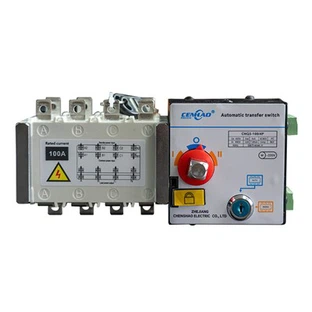
The Switching Process
When a disruption in the primary power source is detected, the ATS activates the alternative power source, usually a generator, and then switches the load from the primary to the alternate source. This process is often so seamless that the end-users might not even notice that a transfer has occurred.
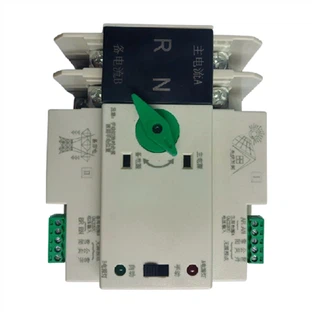
Safety Measures
Safety is paramount when switching between high-voltage power sources. Modern ATS systems are equipped with features like overload protection, phase reversal protection, and short-circuit protection to ensure a safe transfer process.
Uses Of Automatic Transfer Switch
Automatic transfer switches have a wide range of applications in residential, commercial, and industrial settings. Below are some examples:
Solar systems
As we discussed in the intro, an automatic transfer switch is a key component of any grid-connected solar system. Without one, you would need to manually switch to power sources whenever there is a grid failure.
01
UPS systems
A UPS ATS is used in data centers and other critical applications where power should not be interrupted. The switch ensures that backup power is immediately available when needed.
02
Generator backup systems
As we also discussed, an automatic transfer switch for generator backup systems to ensure the generator is only used when needed. This saves fuel and maintenance costs.
03
Building management systems
An ATS in a building management system helps ensure that essential equipment such as elevators, lights, and security systems continue to operate even when there is a power outage.
04
Industrial settings
ATSs are used in a variety of industrial settings, such as factories, where they help ensure that production can continue even when there is a power outage. The switch may be a generator, wind power, or solar automatic transfer switch.
05
Open Transition ATS – The open transition switch or break before make switch is used in systems that can handle the brief interruption in power when switching between utility and local backup power. This delay is typically less than a second long but allows for a safe transfer ensuring that no utility or local employees or people around the devices are at risk. A variation of this type of ATS is called a Programmed Transition switch which pauses between utility power and generator power. This allows residual voltage in circuits to decay prior to restoring power.
Closed Transition ATS – The closed transition system is used in spaces where even a brief interruption in power cannot be tolerated. This ATS has internal systems that allow for both power sources to be on simultaneously and to allow a seamless switchover that maintains safety standards. These systems are more complicated and more expensive than open transition systems.
Soft Loading Transfer Switch – This switch is similar to the closed transition ATS but has the ability to adjust the amount of load it handles from situation to situation. This dynamic capability comes at an extra cost but allows businesses to have greater flexibility against more situations that may require backup power.
Bypass Isolation ATS – This is the most complicated but highest capability ATS system. It is composed of two systems typically running in parallel allowing for inspection, maintenance and testing to be performed while in use. Setups involving Bypass Isolation ATS systems are typically used in the most sensitive business spaces such as critical life support systems, telecommunications, air traffic control stations and other similar priority 1 setups.
Benefits of Using an Automatic Transfer Switch
Uninterrupted power supply
The auto-transfer switch helps connect to other power sources when the primary one is not working. That makes it power reliable. The controller will automatically connect to the secondary power source and give you a seamless experience when the power cut happens.
Simple operations
Once you connect the automatic transfer switch with both the power sources and make the setup, you don’t need to worry about anything. The controller will automatically receive electricity from the secondary source in power cuts. It can be a solar energy source or even a generator, but the switch will automatically function. So using this switch is pretty simple. It takes a one-time setup and works for years.
Safe to use:
Since there are not many operations involved after setup, the switch is safe. You don’t have to touch it anytime. In addition, it is compact and automatic, making it safe to use. Of course, whenever the switch turns awful, a professional can change it, but that does not happen for years.
Increased reliability
If you lose power, an automatic transfer switch ensures you minimize downtime and get the most out of your generator. Unlike a manual switch, an automatic transfer switch will instantly and safely switch your power source to your backup generator.
Ensuring uninterrupted power supply
Even a minor power outage can significantly reduce productivity and profitability in industrial and commercial settings. When a reliable backup power solution and an ATS are installed, the transition happens within seconds.
Protecting equipment from power fluctuations
Sudden power loss can damage sensitive equipment and machinery.
Greater safety
Handling any power source during an outage can be dangerous, especially when employees are trying to manually start a generator in the dark. An automatic transfer switch eliminates this risk and handles this step for you.
Basic Automatic Transfer Switch Functions
The primary reason why a facility installs a transfer switch is to keep its electrical loads connected to either one of two sources of power. As a result, a transfer switch is designed to remain connected to power distribution circuits under all foreseeable circumstances, including very large fault and short-circuit currents. Conversely, a transfer switch is not designed to protect load circuits and equipment. Rather, overcurrent protection devices open circuits, clear faults, and protect downstream circuits and equipment.
The capability that differentiates an ATS from non-automatic and manual transfer switches is the ability to self-initiate load transfer when outages of unacceptable power conditions occur. To do so, an ATS must monitor voltage and frequency on the connected power source. When voltage and frequency are out-of-range or absent, a transfer switch will initiate a transfer sequence.
In a small minority of installations, an ATS may be used to switch between two sources of power that are expected to always be live, such as between two utility feeds. However, for the vast majority of backup power systems, emergency power will be provided by a genset that is driven by an internal combustion engine that operates only when needed. As such, the engine must be successfully started so that load can be transferred to the gensets they power. To do so, an ATS must issue a start signal to the genset.
A genset takes time to start and then accelerate to the operating speed needed to produce acceptable power. The ATS monitors voltage and frequency to verify acceptable power, then transfers load. If the ATS does not detect acceptable power, no transfer occurs because this action would not improve power availability to loads. Doing so would leave loads isolated from the normal source should acceptable power return.
While connected to the emergency source, the ATS monitors the condition of the normal source. When acceptable power returns, the transfer switch initiates transfer from the emergency source to the normal source.
After sensing restoration of acceptable power, an ATS initiates retransfer to the normal source. In this instance, both power sources are available and acceptable. Typically, retransfer occurs when voltages, frequencies, and (where applicable) phase angles of the two sources are within 5 percent, 2 Hertz, and 5 degrees, respectively.
Tests To Perform During Automatic Transfer Switch Maintenance
Conduct a contact/pole-resistance test to ensure that dc millivolt and microhm drop values do not exceed the highest levels of the normal range dictated by the switch manufacturer. If you can’t find this data in published form, be on the lookout for any values with a 50 percent deviation or more from nearby poles or switches of the same type.
Inspect all bolted electrical connections with the help of a thermographic survey, low-resistance ohmmeter, or by utilizing the calibrated torque-wrench method. Look for abnormally high resistance and be prepared to look further into any values that are more than 50% of the lowest recorded value. Also, ensure that bolt/torque levels match up with the manufacturer’s published data.
Complete a variety of automatic transfer tests and observe how the transfer switch operates under the following simulated circumstances; a complete normal power outage, a re-energized normal power source following an outage, a complete loss of emergency power, and single-phase conditions of all types and forms. Investigate any problems and abnormalities as you continue the automatic transfer switch maintenance cycle.
Complete a variety of timing and operational tests on the transfer switch. These tests should be conducted for the following functions; transfer time delay, engine starting, normal power source frequency-sensing and voltage-sensing relays, emergency power source frequency-sensing and voltage-sensing relays, re-transfer time delay when normal power is restored, automatic transfer functionality, limit switch function, and interlocks, and full engine cool down and shutdown. Please note that all testing values should fall in line with the system and manufacturer’s design specifications. Investigate any problems and abnormalities as you continue automatic transfer switch maintenance.
Ensure that all control devices for the transfer switch are operating correctly with the correct settings outlined by the manufacturer. Investigate the settings for all connected timers and make any needed adjustments.
Optional: Conduct insulation-resistance tests for all control wiring in terms of ground. For one minute, apply 1000 volts dc to all 600-volt rated cable and 500 volts dc to all 300-volt rated cable. All insulation-resistance values should be two megohms or more. Compare your findings to results from any previous tests, and investigate any readings under two megohms as soon as possible. Before conducting these tests, you must disconnect and disengage all fuses and plugs for control devices or with solid-state components that are not constructed to handle the test voltage values.
Yueqing City, Zhejiang Province, Fangdouyan Industrial Zone. The company focuses on the field of high and low voltage electrical equipment industry, specializing in the production of universal circuit breaker series, plastic circuit breaker series, small circuit breaker series, AC contactor series, surge protector series, load isolation switch series, isolation knife switch series, control and protection switch series, double power automatic transfer switch series, high voltage components series and other products.

FAQ
As one of the most professional automatic transfer switch manufacturers and suppliers in China, we're featured by quality products and good price. Please rest assured to buy customized automatic transfer switch made in China here from our factory.
Changeover Switch for Generator, Electric Generator Transfer Switch, Dual Power Automatic Transfer Switch