

Rcd Circuit Breaker
Why Choose Us
Business philosophy
The company always adheres to the business philosophy of "survive by quality, develop by technology, and achieve efficiency by management", and meets the current and future needs of customers with high-quality electrical products and services.
Rich industry experience
The company has been continuously upgraded through diversified sales products and services over the years, and has been praised by the majority of users! And enjoy a good reputation and credibility among consumers, and with a number of supporting manufacturers and agents to establish long-term stable cooperative relations.
24-Hour Service
Our dedicated 24-hour online support ensures prompt responses, providing you with an excellent shopping experience. Feel free to reach out with any questions at any time.
Fast delivery time
We have optimized production processes and supply chain management to achieve fast delivery times. With our advanced production scheduling system, we are able to accurately predict production cycles and respond quickly to order needs.
What is Residual Circuit Current Breaker
A residual current circuit breaker (RCCB) is an electrical safety device that disconnects the power supply when it detects an imbalance in the electrical current. This can prevent electric shocks, electrocution, and fires. RCCBs are usually found in a home's circuit breaker box or distribution board (DB box) and can be identified by a switch with a "Test" button.
-
![Direct Current Circuit Breaker]() Direct Current Circuit BreakerDC circuit breakers can be used to protect individual loads that work with direct current, or they can be used to protect main circuits such as those of inverters, solar PV arrays, or battery banks.read more
Direct Current Circuit BreakerDC circuit breakers can be used to protect individual loads that work with direct current, or they can be used to protect main circuits such as those of inverters, solar PV arrays, or battery banks.read more -
![Residual Circuit Current Breaker]() Residual Circuit Current BreakerFaulty Quality of the RCCB: This can cause tripping. When purchasing and installing, ensure the RCCB is reliable and meets standards.read more
Residual Circuit Current BreakerFaulty Quality of the RCCB: This can cause tripping. When purchasing and installing, ensure the RCCB is reliable and meets standards.read more -
![Direct Current Circuit Breaker]() Direct Current Circuit BreakerCommon Range: Depending on the application, the rated current range is wide, ranging from tens of amperes to thousands of amperes.read more
Direct Current Circuit BreakerCommon Range: Depending on the application, the rated current range is wide, ranging from tens of amperes to thousands of amperes.read more -
![Dc Current Circuit Breaker]() Dc Current Circuit BreakerIn modern power systems, DC current is increasingly used, especially in power transmission, data centers, industrial control, and other fields. With the expansion of the scale and complexity of DC...read more
Dc Current Circuit BreakerIn modern power systems, DC current is increasingly used, especially in power transmission, data centers, industrial control, and other fields. With the expansion of the scale and complexity of DC...read more -
![Circuit Breaker Current Limiting]() Circuit Breaker Current LimitingIn the realm of electrical engineering, circuit breakers play a crucial role in safeguarding electrical systems from potential damage due to overloads, short circuits, and other fault conditions.read more
Circuit Breaker Current LimitingIn the realm of electrical engineering, circuit breakers play a crucial role in safeguarding electrical systems from potential damage due to overloads, short circuits, and other fault conditions.read more -
![Circuit Breaker Overcurrent Protection]() Circuit Breaker Overcurrent ProtectionIn the power system, the circuit breaker is a vital safety device. Its primary responsibility is to quickly disconnect the circuit when an overcurrent condition is detected to prevent equipment...read more
Circuit Breaker Overcurrent ProtectionIn the power system, the circuit breaker is a vital safety device. Its primary responsibility is to quickly disconnect the circuit when an overcurrent condition is detected to prevent equipment...read more -
![Residual Current Circuit Breakers]() Residual Current Circuit BreakersIn the intricate world of electrical safety, residual current circuit breakers (RCCBs) play a crucial role in protecting lives and property from the dangers of electrical faults. RCCBs, often...read more
Residual Current Circuit BreakersIn the intricate world of electrical safety, residual current circuit breakers (RCCBs) play a crucial role in protecting lives and property from the dangers of electrical faults. RCCBs, often...read more -
![Residual Circuit Breaker]() Residual Circuit BreakerIn the field of electrical safety, residual circuit breakers (RCBs) are indispensable guardians. They act as "sentinels" within the circuit, constantly monitoring slight changes in current. Upon...read more
Residual Circuit BreakerIn the field of electrical safety, residual circuit breakers (RCBs) are indispensable guardians. They act as "sentinels" within the circuit, constantly monitoring slight changes in current. Upon...read more -
![Residual Current Protection]() Residual Current Protection"Residual current protection (RCP), as a key link in the electrical safety system, is often overlooked by non-professionals, but it plays an irreplaceable role in preventing electrical accidents,...read more
Residual Current Protection"Residual current protection (RCP), as a key link in the electrical safety system, is often overlooked by non-professionals, but it plays an irreplaceable role in preventing electrical accidents,...read more


How Does The Residual Current Circuit Breaker Work


The circuit breaker RCCB is designed to find the difference in current between Live and Neutral. In electrical circuits, the inflow and outflow of current must be equal. A sufficient quantity of current should always flow through the phase and back through the neutral in a healthy circuit. The current flowing through the live wire should be equal to the current returning through the neutral wire. In the event of an earth fault, the current can accidentally reach the earth by contacting a live wire, for example.
As a result, there is less returning current across the neutral wire. The design of the RCCB ensures that it continuously detects and contrasts any differences (residual current value) in the current flowing between the neutral and live wires. The Residual Current Circuit Breaker will trip if there is even a little difference in the circuit.
The test circuit, which essentially connects between the line conductor on the load side and the supply neutral, is always included with the RCD. Testing the circuit with or without the live supply is beneficial. Depending on the resistance included in this circuit, current begins to flow through the test circuit whenever the test button is depressed.
Together with load current, this current flows through the RCD line side coil. However, because the neutral side coil of the RCD is passed by this circuit, there will be an imbalance between the line side and neutral side coils of the device. This will cause the RCCB to trip even in normal conditions to cut off the supply.
The RCCB is a very helpful device for electric shock protection. RCCBs can detect currents as low as 30 mA, which is impossible for other methods of the device to detect. RCCB is always used in conjunction with other protective equipment, such as MCB.
However, RCCBs are not intended to trigger overloads or short circuits, they are simply intended to monitor residual current. The RCCB is displayed for rated current, although that rating simply represents the maximum operating current that the RCCB can support. The most popular RCCBs are 30 mA and 100 mA.
The Main Features Of An Residual Circuit Current Breaker
Residual Current Protection
An RCBO constantly monitors the current flowing through the live (hot) and neutral wires of a circuit. Under normal conditions, the current flowing in both wires should be equal. However, if there is a leakage current (e.g., due to a faulty appliance or current flowing to the ground through a person), the RCBO detects the imbalance and trips, disconnecting the circuit to prevent electric shock.
Over-Current Protection
Similar to an MCB, an RCBO also offers protection against overloads and short circuits. Overloads occur when too much current flows through a circuit, usually due to too many devices being connected or a malfunctioning device. Short circuits happen when the live and neutral wires come into direct contact, resulting in an extremely high current flow. In both cases, the RCBO will trip and disconnect the circuit to prevent damage to electrical equipment, wiring, and reduce the risk of fire.
Combined Protection
By integrating both residual current and over-current protection in a single device, an RCBO provides comprehensive protection for electrical circuits, enhancing safety and reducing the need for separate RCDs and MCBs.
Easy Reset
Once the cause of the trip has been identified and resolved, the RCBO can be easily reset, restoring power to the circuit.
Increased safety: RCDs quickly detect any imbalance between the current flowing into and out of an electrical circuit, which can indicate a ground fault or leakage current. This allows the RCD to rapidly disconnect the power supply, reducing the risk of electric shock and fire hazards.
Protection against electrocution: RCDs can detect even small leakage currents that could be hazardous to humans, providing a vital layer of protection against electric shock and electrocution.
Safeguard for sensitive electronics: RCDs can help protect sensitive electronic equipment from damage caused by ground faults or other electrical issues.
Code requirements: Many building and electrical codes now mandate the use of RCDs in certain applications, such as bathrooms, kitchens, and outdoor outlets, further enhancing safety.
How To Troubleshoot Residual Circuit Current Breaker Trippings
Recurring trippings in your house’s power could signal issues with your connections (or gadgets) that require your utmost attention.
Typically, trippings are triggered by your RCCB instead of the MCB, and a kitchen appliance is likely to be the culprit (not always, though).
Many appliances have neutral wires bound to the ground or earth. If this binding is damaged or undone, it will cause the RCCB to trip, as the RCCB unit detects that the neutral has no current.
This may also happen when the phase (live) wire accidentally touches the earth wire (or the neutral if the neutral and earth are separated).
In numerous instances, the problem may be due to an insulation defect in your appliance or damage to its internal circuitry.
Lastly, check the wirings on the RCCB itself. You should expect trippings to occur if there are loose connections (hot or neutral).

Recurring trippings in your house’s power could signal issues with your connections (or gadgets) that require your utmost attention.
Typically, trippings are triggered by your RCCB instead of the MCB, and a kitchen appliance is likely to be the culprit (not always, though).
Many appliances have neutral wires bound to the ground or earth. If this binding is damaged or undone, it will cause the RCCB to trip, as the RCCB unit detects that the neutral has no current.
This may also happen when the phase (live) wire accidentally touches the earth wire (or the neutral if the neutral and earth are separated).
In numerous instances, the problem may be due to an insulation defect in your appliance or damage to its internal circuitry.
Lastly, check the wirings on the RCCB itself. You should expect trippings to occur if there are loose connections (hot or neutral).
When choosing a Residual Current Circuit Breaker (RCCB), consider the type suitable for your application, such as Type AC for general use or Type A for additional protection against pulsating DC currents. Ensure the RCCB's sensitivity matches the application requirements. During installation, follow these steps:
Turn Off Power: De-energize the circuit to ensure safety during installation.
Identify Live and Neutral Conductors: Properly identify and connect the live and neutral conductors to the RCCB.
Connect Load Conductors: Connect the load conductors to the RCCB's output terminals.
Test Operation: Test the RCCB to ensure proper functioning, including tripping at the specified residual current.
Secure and Seal: Secure the RCCB in the distribution board and seal the connections to prevent tampering. Always follow manufacturer guidelines and local electrical codes.
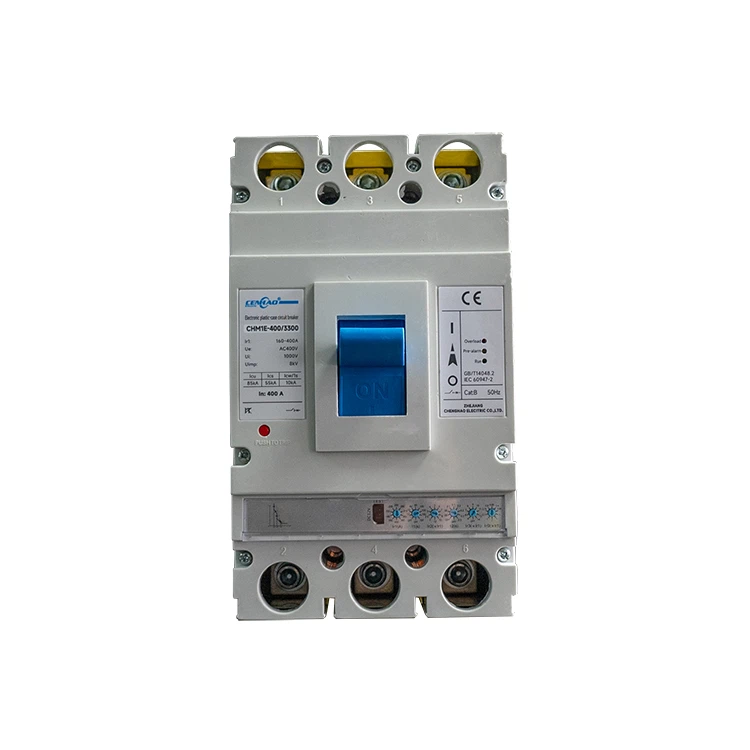
What is Dc Current Circuit Breaker
A DC circuit breaker is a protective device designed to interrupt and control the flow of direct current (DC) within an electrical system. They serve the same basic purpose as AC circuit breakers, but are specifically designed for the unique characteristics of DC circuits.
Types Of Dc Circuit Breakers
Dc Mcb Miniature Circuit Breaker
An MCB (Magnesium Contact Breaker) is a type of circuit breaker designed to protect electrical circuits from overcurrents caused by overload, short circuits, or faulty wiring. It’s suitable for residential, commercial, and industrial systems as well as industrial uses due to its high current rating of up to 2500 Amps and adjustable trip settings.
Dc Mccb Dc Molded Case Circuit Breaker
The DC MCCB, also known as a DC molded case circuit breaker, is widely used in industrial and commercial settings. With adjustable trip settings and its robust construction, it makes an ideal choice for heavy-duty tasks.
Type B Rcd Residual Current Device
The Type B RCD Residual Current Device is a circuit breaker that works based on residual current in a circuit, helping it detect any electrical faults and cut off potentially hazardous currents. These lifesavers help prevent many non-fatal wounds and electrocutions.
The Dc Circuit Breakers Working Principle
DC circuit breakers first require a current sensing mechanism to monitor the current levels in the circuit. This is usually achieved through a built-in current sensor, which can be resistive, current transformer (CT) or other type of sensor. When the current exceeds a preset safety threshold, the sensor triggers the circuit breaker’s protection mechanism.
Once an abnormal current is detected, the sensor sends a signal to the circuit breaker’s control unit. The control unit evaluates this signal and determines whether measures need to be taken to interrupt the circuit. In some advanced DC circuit breakers, this evaluation process may include complex algorithms to distinguish between true faults and temporary current fluctuations.
If the control unit determines that the circuit needs to be opened, it activates the mechanical or electronic switching portion of the circuit breaker. In a mechanical circuit breaker, this may involve a fast-acting spring mechanism that rapidly separates the circuit breaker’s contacts, interrupting the current flow. In electronic circuit breakers, this may involve semiconductor switching devices such as transistors or thyristors, which can switch states very quickly.
During the process of breaking a circuit, arcing may occur as the current attempts to maintain its path. Arcing can generate high temperatures, damage equipment, and possibly cause fires. Therefore, DC circuit breakers often contain arc suppression devices that rapidly cool the arc and dissipate its energy to prevent the arc from causing damage to the circuit breaker itself or connected equipment.
Once the circuit is disconnected, the system can be safely inspected and repaired. After the problem is resolved, the circuit breaker can be reset manually or automatically. Some DC circuit breakers have an auto-reset feature that allows them to automatically restore connections after confirming that the circuit is safe. However, for certain types of failures, a manual reset may be required to ensure the safety of the system.
The Advantages Of Dc Circuit Breaker
Improved Arc Extinguishing
DC circuit breakers are designed to handle and extinguish DC arcs more effectively. DC arcs are generally more difficult to extinguish than AC arcs because DC systems do not have a zero crossing point. DC circuit breakers have a special arc extinguishing mechanism: B. Magnetic extinguishing coil to quickly extinguish the arc and prevent re-ignition.
Low voltage drop
DC circuit breakers typically have a lower voltage drop across contacts compared to AC circuit breakers. This is beneficial in applications where voltage stability is critical, as it minimizes power loss and allows for more precise control of the DC system and DC circuit breaker connections.
Reduced response time
DC circuit breakers often have a faster response time compared to AC circuit breakers. Because DC systems have no zero-crossing points, faults can be detected and cleared more quickly, providing faster protection against short circuits and other abnormal conditions.
Compact size
DC circuit breakers are more compact and lighter than AC circuit breakers with the same rated current. This is because DC systems generally have smaller dimensions and fewer components to operate.
Increased selectivity
A DC circuit breaker can improve selectivity. In other words, in the event of a fault, only the faulty section of the circuit is isolated, leaving the rest of the circuit unaffected. This selective operation minimizes downtime and interference in connected DC systems.
Compatibility with DC power supplies and loads
DC circuit breakers are specifically designed to handle the characteristics of DC power sources and loads. It can interrupt and control DC current without the limitations of AC circuit breakers optimized for AC current.
Security aspects
DC circuit breakers can provide advanced safety features such as: B. Arc fault detection, ground fault protection, overload protection. These features help ensure the safe operation and protection of DC power systems and their connected devices.
Understand Your Application
Identify the system voltage: Determine the operating voltage of your DC system. Common DC voltages include 12V, 24V, 48V, 110V, 220V, and higher, especially in industrial and renewable energy applications.
Determine the application type: Consider whether the breaker is for residential, commercial, industrial, or renewable energy applications (such as solar PV systems).
Determine the Current Rating
Calculate the full-load current: Add up the total current draw of all the devices connected to the circuit. This will give you the full-load current.
Select a breaker rating: Choose a breaker with a current rating that is 125% to 150% of the full-load current. This provides a safety margin and helps prevent nuisance tripping.
Interrupting Capacity
Check the interrupting rating: Ensure the circuit breaker can safely interrupt the maximum fault current that could occur in your system. The interrupting capacity should be higher than the maximum short-circuit current of the system.
Trip Curve and Characteristics
Choose the trip curve: Select a trip curve (B, C, D, etc.) that matches your application. The trip curve determines how quickly the breaker will trip under overload conditions.
Type B: Trips at 3-5 times the full load for residential circuits with lighting and heating.
Type C: Trips at 5-10 times the full load for general commercial applications.
Type D: Trips at 10-20 times the full load for industrial use with motors or transformers where high inrush currents occur.
Environmental Considerations
Ambient temperature: Consider the operating environment. High temperatures can affect the performance of circuit breakers. Choose a breaker that can operate reliably within the temperature range of the application.
Enclosure and mounting: Decide on the type of enclosure (e.g., NEMA or IP rating) if the breaker will be used in a harsh environment. Also, consider the mounting type (panel mount, DIN rail, etc.).
Additional Features
Remote trip and monitoring: Some applications may require remote tripping capabilities or integration with monitoring systems. Ensure the breaker you choose supports these features if needed.
DC-specific characteristics: Make sure the breaker is specifically rated for DC applications, as AC and DC circuit breakers have different arc-extinguishing mechanisms.
Compliance and Standards
Check for certification: Verify that the DC circuit breaker complies with relevant industry standards and certifications (e.g., UL, IEC) to ensure safety and reliability.
Yueqing City, Zhejiang Province, Fangdouyan Industrial Zone. The company focuses on the field of high and low voltage electrical equipment industry, specializing in the production of universal circuit breaker series, plastic circuit breaker series, small circuit breaker series, AC contactor series, surge protector series, load isolation switch series, isolation knife switch series, control and protection switch series, double power automatic transfer switch series, high voltage components series and other products.

FAQ
As one of the most professional rcd circuit breaker manufacturers and suppliers in China, we're featured by quality products and good price. Please rest assured to buy customized rcd circuit breaker made in China here from our factory.
Residual Current Circuit Breakers, Circuit Breaker Current Limiting, Residual Circuit Breaker