

Molded Case Circuit Breaker
Why Choose Us
Business philosophy
The company always adheres to the business philosophy of "survive by quality, develop by technology, and achieve efficiency by management", and meets the current and future needs of customers with high-quality electrical products and services.
Rich industry experience
The company has been continuously upgraded through diversified sales products and services over the years, and has been praised by the majority of users! And enjoy a good reputation and credibility among consumers, and with a number of supporting manufacturers and agents to establish long-term stable cooperative relations.
24-Hour Service
Our dedicated 24-hour online support ensures prompt responses, providing you with an excellent shopping experience. Feel free to reach out with any questions at any time.
Fast delivery time
We have optimized production processes and supply chain management to achieve fast delivery times. With our advanced production scheduling system, we are able to accurately predict production cycles and respond quickly to order needs.
What is Molded Case Circuit Breaker
Molded case circuit breakers(MCCBs) automatically cut off current when the current exceeds the trip setting. Plastic housing refers to the housing of a device using a plastic insulator to isolate between conductors and the grounded metal part. Molded case circuit breakers usually contain thermal magnetic trip units, while large moulded case circuit breakers are equipped with solid state trip sensors.
-
![Mccb Breaker]() Mccb BreakerA molded case circuit breaker (MCCB) is a safety device that protects electrical circuits from short circuits and overloads by preventing excessive current flow. MCCBs can be used in a variety of...read more
Mccb BreakerA molded case circuit breaker (MCCB) is a safety device that protects electrical circuits from short circuits and overloads by preventing excessive current flow. MCCBs can be used in a variety of...read more -
![Insulated Case Circuit Breaker]() Insulated Case Circuit BreakerProtects circuits and equipment from overload, short circuit, and other faults.read more
Insulated Case Circuit BreakerProtects circuits and equipment from overload, short circuit, and other faults.read more
The insulated case provides additional safety against arcing and electric shock, suitable for high voltage... -
![Moulded Circuit Breaker]() Moulded Circuit BreakerThe main function of the molded case circuit breaker is to automatically cut off the current. When the current exceeds the set trip value, it quickly disconnects the circuit to protect it from...read more
Moulded Circuit BreakerThe main function of the molded case circuit breaker is to automatically cut off the current. When the current exceeds the set trip value, it quickly disconnects the circuit to protect it from...read more -
![Molded Case Breaker]() Molded Case BreakerMolded case circuit breakers are primarily used in low-voltage power distribution systems as essential components for circuit protection and control.read more
Molded Case BreakerMolded case circuit breakers are primarily used in low-voltage power distribution systems as essential components for circuit protection and control.read more -
![Dc Molded Case Circuit Breaker]() Dc Molded Case Circuit BreakerDC molded case circuit breakers utilize special arc extinguishing and current limiting systems to quickly interrupt fault currents in DC power distribution systems. This ensures circuits can be...read more
Dc Molded Case Circuit BreakerDC molded case circuit breakers utilize special arc extinguishing and current limiting systems to quickly interrupt fault currents in DC power distribution systems. This ensures circuits can be...read more -
![Nm1 Moulded Case Circuit Breaker]() Nm1 Moulded Case Circuit BreakerThe NM1 Molded Case Circuit Breaker is suitable for AC 50Hz or 60Hz distribution network circuits with a rated working voltage up to 690V. It has a rated insulation voltage of up to 800V (500V for...read more
Nm1 Moulded Case Circuit BreakerThe NM1 Molded Case Circuit Breaker is suitable for AC 50Hz or 60Hz distribution network circuits with a rated working voltage up to 690V. It has a rated insulation voltage of up to 800V (500V for...read more -
![Case Circuit Breaker]() Case Circuit BreakerChoose the circuit breaker's rated current based on the circuit's load current and expected maximum operating current. Typically, the rated current should slightly exceed the circuit's maximum...read more
Case Circuit BreakerChoose the circuit breaker's rated current based on the circuit's load current and expected maximum operating current. Typically, the rated current should slightly exceed the circuit's maximum...read more -
![Mccb Circuit Breaker]() Mccb Circuit BreakerConfirm the environment: Ensure that the installation environment is dry, well-ventilated, free of corrosive gases, and avoid places with high temperature, high humidity or strong vibration.read more
Mccb Circuit BreakerConfirm the environment: Ensure that the installation environment is dry, well-ventilated, free of corrosive gases, and avoid places with high temperature, high humidity or strong vibration.read more -
![Mccb Breaker]() Mccb BreakerConfirm the Environment: Ensure the installation environment is dry, well-ventilated, free of corrosive gases, and avoid locations with high temperatures, humidity, or strong vibrations.read more
Mccb BreakerConfirm the Environment: Ensure the installation environment is dry, well-ventilated, free of corrosive gases, and avoid locations with high temperatures, humidity, or strong vibrations.read more -
![Molded Circuit Breaker]() Molded Circuit BreakerAutomatically cutting off current, especially when it exceeds the set trip value.read more
Molded Circuit BreakerAutomatically cutting off current, especially when it exceeds the set trip value.read more -
![Molded Breaker]() Molded BreakerPrimarily used in low-voltage circuits, especially in secondary power distribution systems such as floor main switches and power boxes. It provides short circuit and overload protection at high...read more
Molded BreakerPrimarily used in low-voltage circuits, especially in secondary power distribution systems such as floor main switches and power boxes. It provides short circuit and overload protection at high...read more


Maintenance Of Molded Case Circuit Breaker
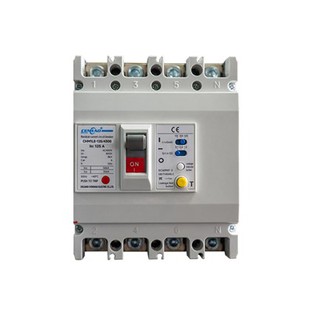


Visual Inspection
During the visual inspection of a MCCB, it is important to look out for deformed contacts or cracks in casing or insulation. Any burn marks on contact or casing should be treated with caution.
Lubrication
Some MCCBs require adequate lubrication to ensure the smooth operation of the manual disconnection switch and internal moving parts.
Cleaning
The dirt deposits on MCCBs can deteriorate the MCCB components. If the dirt includes any conducting material it may create a path for current and cause an internal fault.
Testing
There are three main tests that are carried out as a part of maintenance procedure of a MCCB.
Insulation Resistance Test
The tests for a MCCB should be conducted by disconnecting the MCCB and testing the insulation between the phases and across the supply and load terminals. If the measured insulation resistance is lower than the manufacturer’s recommended insulation resistance value then the MCCB will not be able to provide adequate protection.
Contact Resistance
This test is conducted by testing the resistance of the electrical contacts. The measured value is compared to the value specified by the manufacturer. Under normal operating conditions, contact resistance is very low since MCCBs must allow operating current through with minimum losses.
Tripping Test
This test is conducted by testing the response of the MCCB under simulated overcurrent and fault conditions. Thermal protection of the MCCB is tested by running a large current through the MCCB (300% of rated value). If the breaker fails to trip, it is an indication of failure of thermal protection. The test for magnetic protection is conducted by running short pulses of very high current. Under normal conditions, magnetic protection is instant. This test should be conducted at the very end as high currents increase the temperature of contacts and insulation, and this may alter the results of other two tests.
Different Types Of Molded Case Circuit Breaker
Type B: This type of molded case circuit breaker trips between 3-5 times the rated current. Tripping time is 0.04-13 seconds. These mostly have resistive, domestic applications and can handle low surge currents.
Type C: These trip between 5-10 times their rated current. Tripping times fall within the range of 0.04-5 seconds. Applications involve relatively modest inductive loads, such as small motors, transformers, and electromagnets typically used in industrial settings. Suitable for higher surges.
Type D: Type D MCCBs are known to trip between 10-20 times their rated current, and their tripping time ranges from 0.04 to 3 seconds. These MCCBs exhibit the highest surge tolerance and are thus selected for applications with extremely inductive loads like large electrical motors commonly found in industrial environments.
Type K: These trip when the current reaches 10-12 times their rated current. Tripping time falls between 0.04 to 5 seconds. Applications involve inductive loads like motors.
Type Z: Type Z MCCBs are the most sensitive among MCCBs, tripping when the current reaches only 2-3 times their rated current. They have the shortest tripping time and are employed for applications where extreme sensitivity is essential. This includes protecting semiconductor-based medical equipment and other costly devices that are susceptible to low current surges.

Rated Current (In) is the exceeding value when the overload protection reaches its tipping point. You can modify these values in MCCB.
Rated Frame Current (Inm) is the maximum capacity value of the MCCB and dictates its ‘physical form.
Rated Insulation Voltage (Ui) is the maximum current MCCBs can handle as evidenced by the conducted tests. It is greater than the rated working voltage to give an allocated safety margin while in use.
Rated working voltage (Ue) is the uninterrupted operating voltage of MCCB. This is usually equal to or near the standard level of system voltage.
Operating short-circuit breaking capacity (Ics) is the maximum ‘fault current that MCCB can ‘trip without permanent damage. You can continue using the MCCB after a fault interruption, provided it doesn’t go beyond the limits.
Mechanical life is the number of times you can operate the device manually before it dysfunctions.
Electrical life is the estimated number of times the MCCB can ‘trip before it completely becomes unusable.
Protecting Generators
They usually produce hundreds of amps in output and require expensive gen-sets. Molded Case Circuit Breaker, which can handle the current ratings, provide the protection needed.
Protecting Electric Feeders
If you are using feeder circuits to distribute electric current, they can carry hundreds of amps. In some instances, you may also have additional circuits that will need trip settings. MCCBs come in handy in both the situations.
Welding Machines
It is possible to have some welding applications that draw very high currents thus needing MCCBs since miniature circuit breakers cannot handle the high currents.
Protecting Capacitor Banks
These are used to correct power factors in industrial and commercial electrical systems. If the currents they draw are very high, Molded Case Circuit Breaker protection becomes a necessity to reduce currents.
Protecting Motors
Electric motors also need to be adequately protected and Molded Case Circuit Breaker do this work very well. Inrush current may need to be adjusted, providing the necessary overload protection without tripping.
Adjustable trip settings for applications with low currents
Molded Case Circuit Breaker, even though they are known to be used with high current applications can also be used with low current ones. They provide adjustable trip settings.
The Main Components Of An Molded Case Circuit Breaker
The molded case or frame is the cushion that keeps all parts of the circuit breaker in place. It is solidly built from ‘glass polyester’ or ‘thermoset composite resin that gives a great nonconducting strength despite its compressed size.
The terminals serve as connectors between external conductors and molded cases. They should be connected properly to prevent unusual heat production.
This is the switch that opens and closes the molded case. Its handle connects the pull of the device and manual push.
The Trip System is composed of temperature and current-reactive electromagnetic sensors that trigger the Operating Apparatus in case of short-circuit or current overloads. Its button can be pressed to reset the circuit breaker.
The Arc Extinguisher’s primary role is to curb and split the arc that can damage your circuit breaker. The action results in exterminating the current flow in the circuit breaker. Inside the arc chamber are contacts. Their role is to conduct and disrupt functions. Arc ‘Runners, on the other hand, function as new electrodes for the arc. Arc chutes, on the other hand, compress the arc in the middle of sidewall insulators.
Rated Limit Short Circuit Breaking Capacity Icu
There are two kinds of breaking capacity indexes of circuit breaker: rated limit short-circuit breaking capacity ICU and rated operating short-circuit breaking capacity ICs. ICs, as a characteristic parameter, not only considers the breaking capacity of the circuit breaker, but also serves as a breaking index, within the specified number of breaking short circuit faults, the normal operation of the circuit breaker can be ensured.
Current limiting and breaking capacity
When the circuit breaker is short circuited and the contact is opened rapidly, an arc is generated, which is equivalent to a rapidly increasing arc resistance in series in the line, thus limiting the increase of fault current. The less the breaking time of circuit breaker is, the closer ICs will be to ICU, and the better current limiting effect will be. The adverse effects of electromagnetic effect, electric effect and thermal effect caused by short circuit current on circuit breaker and electrical equipment can be greatly reduced, and the service life of circuit breaker can be prolonged.
Short circuit protection
Short circuit protection is short circuit instantaneous trip. Attention should be paid to timely adjust the setting value of the protection after the load changes, so as to prevent the power supply quality from being affected by frequent tripping when the setting value is too small. Or the line and equipment cannot be effectively protected if the setting value is too high.
Overload delay protection
Overload delay protection means that the load current exceeds the limited range of the equipment, and there is a risk of burning the equipment. The protection device can cut off the power supply within a certain period of time. Overload has a process of heat accumulation, and the protection action does not need to be too fast. For short-time over-current, the protection should not act.
Isolation function
The isolation function is to require that the leakage current after the circuit breaker is disconnected will not cause harm to people and equipment. After several short circuit trips, the switch performance decreases and the leakage current increases. For human body, the leakage current below 30mA is the safe leakage current, while in the harsh environment, the leakage current over 300mA lasts for more than 2 hours, which may cause insulation damage and lead to phase to ground short circuit and fire.
Types Of Molded Case Circuit Breaker By Application
Mains protection–Power supply circuits that supply power to large distribution boards often have very high currents, hundreds of amperes. In addition, if more circuits are added to the system in the future, it may be necessary to adjust the interrupt settings of the circuit breaker. Therefore, a molded case circuit breaker is required.
Capacitor Bank Protection–Capacitor banks are a very important component of commercial and industrial electrical systems, as they allow power factor correction – reducing line currents and preventing charges from electrical company. Large capacitors can have high currents and will require MCCB protection
Generator Protection–Large generators can provide hundreds of amps of output. In addition, genomes are often very expensive. The high current rating of molded case circuit breakers allows them to provide reliable protection in this application.
Welding applications–Some welders can generate very high currents beyond the capabilities of miniature circuit breakers, requiring the use of MCCBs
Low current applications require adjustable trip settings – MCCBs aren’t just for high current applications. There are models rated for less than 100 amps where low current equipment requires an adjustable trip setting powered by MCCB.
Engine protection–MCCB’s reliable protection makes them the right choice for motor protection. Molded-shell circuit breakers can be adjusted to provide overload protection without tripping when the electric motor’s inrush current.
Yueqing City, Zhejiang Province, Fangdouyan Industrial Zone. The company focuses on the field of high and low voltage electrical equipment industry, specializing in the production of universal circuit breaker series, plastic circuit breaker series, small circuit breaker series, AC contactor series, surge protector series, load isolation switch series, isolation knife switch series, control and protection switch series, double power automatic transfer switch series, high voltage components series and other products.

FAQ
As one of the most professional molded case circuit breaker manufacturers and suppliers in China, we're featured by quality products and good price. Please rest assured to buy customized molded case circuit breaker made in China here from our factory.
Molded Circuit Breaker, Insulated Case Circuit Breaker, Molded Case Breaker