

Yo, what's up everyone! I'm an Electronic Breaker supplier, and today I wanna chat about the energy consumption of an electronic breaker. It's a topic that might not seem super exciting at first glance, but trust me, it's pretty important, especially if you're in the market for one of these bad boys.
First off, let's talk about what an electronic breaker is. In simple terms, it's a device that protects an electrical circuit from damage caused by overcurrent, typically resulting from an overload or a short circuit. Unlike traditional mechanical breakers, electronic breakers use electronic components to detect and interrupt the flow of electricity. They're often more precise, faster, and can offer additional features like remote monitoring and control. You can check out more about them on this Electronic Breaker page.
Now, onto the main question: what's the energy consumption of an electronic breaker? Well, the energy consumption of an electronic breaker can vary widely depending on a few factors.
One of the biggest factors is the type of electronic breaker. There are different kinds out there, like Solid State Circuit Breaker and Electronic Circuit Breaker. Solid-state circuit breakers, for example, generally have lower standby power consumption compared to some other types. This is because they use semiconductor devices to control the flow of current, and these devices can be designed to consume very little power when in a non - conducting state.
Standby power consumption is a key aspect when we talk about energy usage. Even when an electronic breaker isn't actively tripping or interrupting a circuit, it still uses a small amount of power to keep its internal electronics operational. This standby power can be affected by the complexity of the breaker's design. Breakers with more advanced features like built - in sensors for monitoring current, voltage, and temperature are likely to consume more standby power. Why? Well, these sensors need to be powered constantly to collect and process data.
Another factor that influences energy consumption is the rating of the breaker. Higher - rated breakers, which are designed to handle larger currents, usually consume more energy. This is because they need more robust components to handle the higher electrical loads, and these components often require more power to operate. For instance, a 100 - amp electronic breaker will probably use more energy than a 15 - amp one.
The operating environment also plays a role. Electronic breakers are sensitive to temperature. In high - temperature environments, the internal components of the breaker may have to work harder to maintain their performance. This can lead to increased energy consumption. On the other hand, in very cold environments, the performance of some electronic components may degrade, and the breaker may need to use more power to compensate for this.

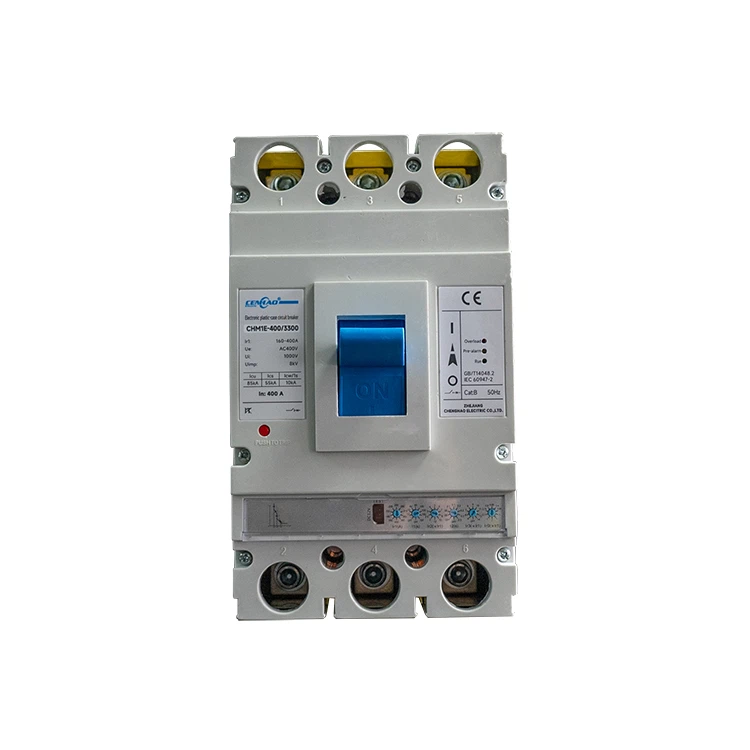
Let's take a look at some real - world numbers. In general, the standby power consumption of a basic electronic breaker can range from a few milliwatts to a few watts. For example, a simple residential - grade electronic breaker might have a standby power consumption of around 1 - 2 watts. However, more advanced industrial - grade breakers with a lot of monitoring and control features could have a standby power consumption of 5 - 10 watts or even more.
When it comes to the energy consumed during a trip event, it's a bit more complicated. The energy used during a trip depends on how quickly the breaker needs to interrupt the current. Faster - acting breakers, which are often preferred for safety reasons, may consume more energy during the tripping process. This is because they need to activate their internal mechanisms rapidly, which requires a burst of power.
Now, you might be wondering why all this matters. Well, for one, energy consumption directly impacts your electricity bill. If you have a large number of electronic breakers in a building or an industrial facility, even a small amount of standby power consumption per breaker can add up over time. Plus, in today's world, where energy efficiency is a big deal, using breakers with lower energy consumption is not only good for your wallet but also for the environment.
As an Electronic Breaker supplier, I understand the importance of energy - efficient products. That's why we're constantly working on improving the design of our breakers to reduce their energy consumption without sacrificing performance or safety. We use the latest semiconductor technology and advanced circuit design techniques to minimize standby power and optimize the energy used during tripping events.
If you're in the market for an electronic breaker, it's important to consider energy consumption as one of your criteria. Don't just focus on the price or the basic ratings. Look at the energy - efficiency features of the breaker. Ask the supplier about the standby power consumption and the energy used during tripping.
We offer a wide range of electronic breakers that are designed with energy efficiency in mind. Whether you need a breaker for a small residential application or a large industrial project, we've got you covered. Our breakers are not only reliable and safe but also help you save on energy costs in the long run.
If you're interested in learning more about our products or have any questions about the energy consumption of electronic breakers, don't hesitate to reach out. We're here to help you make the right choice for your electrical system. Contact us to start a procurement discussion, and let's find the perfect electronic breaker for your needs.
References
- General knowledge about electronic breakers and electrical engineering principles.
- Industry research on energy consumption of electrical devices.