

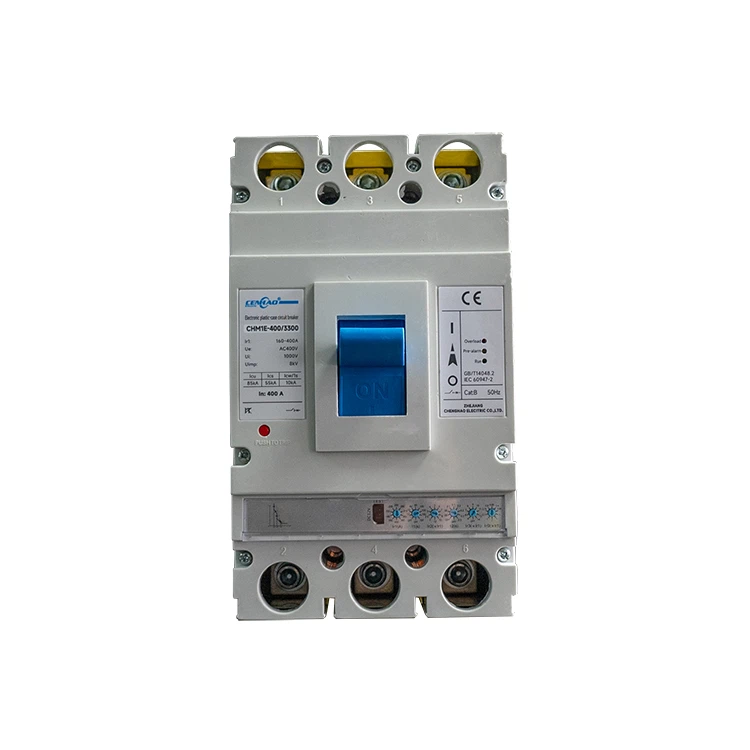
Common Causes of Electronic Circuit Breaker Failures
Overload and Short Circuit
● Overload: When the current passing through the electronic circuit breaker exceeds its rated value, it causes an overload. Prolonged overload increases the temperature inside the circuit breaker, potentially damaging internal components and eventually triggering the breaker to disconnect the circuit.
● Short Circuit: A direct short circuit in the circuit results in a very high current, far exceeding the electronic breaker's rated current. This quickly causes the circuit breaker to trip, protecting the circuit and equipment.
Equipment Aging and Damage
● Component Aging: Over time, electronic components inside the circuit breaker (such as relays, capacitors, resistors, etc.) may age and degrade in performance, leading to malfunction or improper operation of the circuit breaker.
● Mechanical Wear: Some electronic circuit breakers with mechanical structures may experience wear in mechanical parts, which can also lead to failure.
External Environmental Factors
● Temperature: Extreme temperatures, whether too high or too low, can adversely affect electronic circuit breakers. High temperatures may cause overheating and component damage, while low temperatures may affect the conductivity of electronic components.
● Humidity and Corrosion: High humidity or exposure to corrosive gases can cause internal components of the electronic circuit breaker to become damp or corroded, impairing normal operation.
● Vibration and Shock: In environments with significant vibration or shock, internal connections of the electronic circuit breaker may loosen, resulting in poor contact or even short circuits.
Configuration and Setting Errors
● Improper Parameter Settings: Incorrect settings of protection parameters (such as current thresholds, time delays, etc.) can cause the circuit breaker to trip unnecessarily or fail to trip when needed.
● Configuration Errors: In complex power systems, configuration errors (like wiring mistakes or incorrect signal line connections) may also lead to failures.
Other Reasons
● Software Failure: Electronic circuit breakers with microprocessors or controllers may experience software failures (such as program errors or data loss), affecting proper operation.
● Power Supply Issues: Unstable power supply or power failures can result in insufficient power reaching the electronic circuit breaker, causing operational failures.
Solutions
To address the aforementioned causes of faults, the following measures can be implemented:
● Regular Inspection and Maintenance: Conduct regular inspections and maintenance of electronic circuit breakers to promptly identify and replace aging components.
● Optimize the Environment: Improve the working environment conditions, such as regulating temperature, humidity levels, and minimizing exposure to corrosive elements.
● Ensure Correct Configuration and Settings: Verify that protection parameters are correctly set and configurations are accurate in complex systems.
● Enhance Power Supply Stability: Ensure stable and reliable power supply to electronic circuit breakers to maintain proper functionality.

Hot Tags: electronic breaker, China electronic breaker manufacturers, suppliers, factory, Nm1 Moulded Case Circuit Breaker, Dc Molded Case Circuit Breaker, Insulated Case Circuit Breaker, Direct Current Circuit Breaker, rcd circuit breaker, moulded case circuit breaker


