

Can an electronic plastic-case circuit breaker be used in high-voltage circuits? This is a question that often arises in the electrical engineering field, and as a supplier of electronic plastic-case circuit breakers, I'm here to provide a comprehensive analysis.

Understanding Electronic Plastic-Case Circuit Breakers
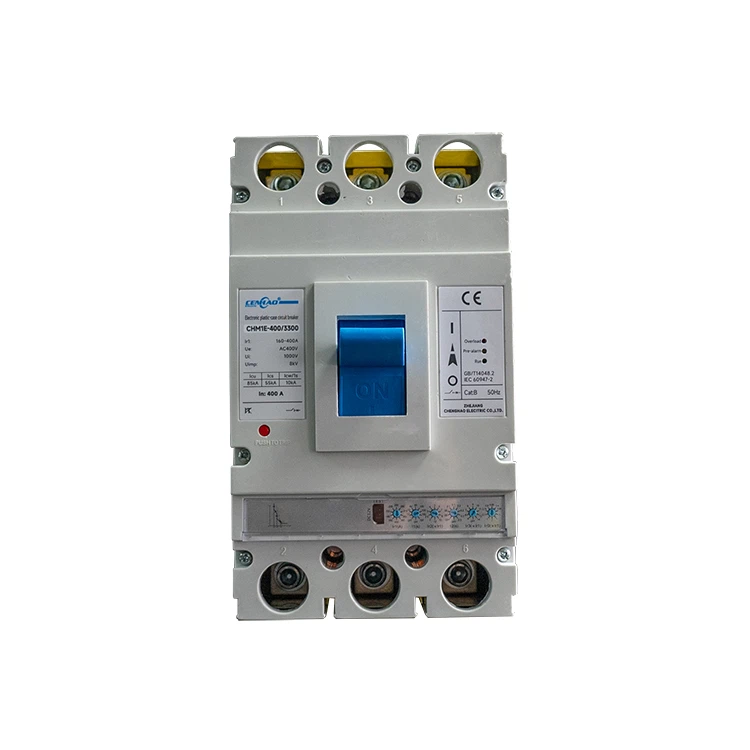
First, let's delve into what electronic plastic-case circuit breakers are. These breakers are designed to protect electrical circuits from overcurrent, short circuits, and other electrical faults. The "electronic" aspect implies that they use electronic components to detect and respond to abnormal electrical conditions, offering more precise and adjustable protection compared to traditional thermal or magnetic circuit breakers. The "plastic-case" refers to the housing made of plastic, which provides insulation and protection for the internal components.
Electronic plastic-case circuit breakers are known for their versatility and are commonly used in a wide range of low-voltage applications, such as commercial buildings, industrial facilities, and residential settings. They offer features like adjustable trip settings, remote monitoring, and communication capabilities, making them a popular choice for modern electrical systems. For instance, the Smart Electric Breaker is a prime example of an advanced electronic plastic-case circuit breaker that can be integrated into smart grid systems for enhanced control and management.
Characteristics of High-Voltage Circuits
High-voltage circuits typically operate at voltages above 1000 volts and are used in power transmission and distribution networks, large industrial plants, and some specialized applications. These circuits carry significant amounts of electrical energy, and any fault can have severe consequences, including equipment damage, power outages, and safety hazards.
The main challenges in high-voltage circuits include high dielectric stress, large fault currents, and the need for rapid and reliable protection. High-voltage circuit breakers must be able to interrupt high currents quickly and safely, withstand high voltages without breaking down, and provide reliable protection under various operating conditions.
Can Electronic Plastic-Case Circuit Breakers Be Used in High-Voltage Circuits?
The short answer is generally no, and here are the reasons:
Insulation and Voltage Rating
One of the primary limitations of electronic plastic-case circuit breakers is their voltage rating. These breakers are typically designed for low-voltage applications, usually up to 690 volts. The plastic housing and internal insulation materials are not designed to withstand the high dielectric stress present in high-voltage circuits. High voltages can cause electrical breakdown in the insulation, leading to arcing, short circuits, and potential damage to the breaker and the surrounding equipment.
Interrupting Capacity
High-voltage circuits can experience very large fault currents, often in the tens or hundreds of kiloamperes. Electronic plastic-case circuit breakers have limited interrupting capacities, typically in the range of a few kiloamperes to tens of kiloamperes. They are not capable of safely interrupting the high fault currents that can occur in high-voltage systems. In contrast, high-voltage circuit breakers are specifically designed with advanced arc interruption technologies, such as SF6 gas or vacuum interrupters, to handle large fault currents.
Safety and Reliability
Safety is of utmost importance in high-voltage circuits. Electronic plastic-case circuit breakers may not provide the same level of safety and reliability as high-voltage circuit breakers. High-voltage applications require circuit breakers that are rigorously tested and certified to meet strict safety standards. The design and construction of electronic plastic-case circuit breakers do not meet the requirements for high-voltage safety, and their use in high-voltage circuits could pose a significant risk to personnel and equipment.
Alternatives for High-Voltage Applications
For high-voltage applications, specialized high-voltage circuit breakers are required. These include:
SF6 Circuit Breakers
SF6 circuit breakers use sulfur hexafluoride gas as the arc quenching medium. SF6 gas has excellent dielectric and arc quenching properties, making it suitable for high-voltage applications. These breakers are capable of interrupting large fault currents and are widely used in power transmission and distribution networks.
Vacuum Circuit Breakers
Vacuum circuit breakers use a vacuum interrupter to interrupt the current. They offer high reliability, long service life, and low maintenance requirements. Vacuum circuit breakers are commonly used in medium-voltage and some high-voltage applications.
Air Circuit Breakers
Air circuit breakers use air as the arc quenching medium. They are suitable for medium-voltage applications and are known for their simplicity and cost-effectiveness.
The Role of Electronic Plastic-Case Circuit Breakers in Electrical Systems
Although electronic plastic-case circuit breakers are not suitable for high-voltage circuits, they play a crucial role in low-voltage electrical systems. They provide reliable protection for a wide range of equipment, including motors, transformers, and electrical panels. Their adjustable trip settings and advanced features make them ideal for applications where precise protection and control are required.
For example, in a commercial building, electronic plastic-case circuit breakers can be used to protect individual circuits, such as lighting, HVAC, and power outlets. The Electronic Breaker can be configured to trip at specific overcurrent levels, preventing damage to the connected equipment and ensuring the safety of the building's occupants.
Conclusion
In conclusion, electronic plastic-case circuit breakers are not suitable for use in high-voltage circuits due to their limited voltage rating, interrupting capacity, and safety considerations. High-voltage applications require specialized high-voltage circuit breakers that are designed to handle the unique challenges of high-voltage systems.
However, electronic plastic-case circuit breakers are essential components in low-voltage electrical systems, offering reliable protection and advanced features. If you are in the market for high-quality electronic plastic-case circuit breakers for your low-voltage applications, we are here to assist you. Our range of products, including the Thermal Circuit Breaker, is designed to meet the diverse needs of our customers. Contact us to discuss your specific requirements and explore how our products can enhance the safety and efficiency of your electrical systems.
References
- Blackburn, J. L. (1998). Protective Relaying: Principles and Applications. Marcel Dekker.
- Gross, C. A. (2007). Electric Power Generation, Transmission, and Distribution. Wiley-IEEE Press.
- Kirtley, J. L. (2004). Electric Machinery Fundamentals. McGraw-Hill.