

As a supplier of electronic plastic-case circuit breakers, I often encounter customers who are confused about the differences between standard and high-performance electronic plastic-case circuit breakers. In this blog post, I will delve into the key distinctions between these two types of circuit breakers, helping you make an informed decision when choosing the right one for your specific needs.
Working Principle
Let's start with the working principle. Standard electronic plastic-case circuit breakers, often Thermal Circuit Breaker, rely on a bimetallic strip and an electromagnet. The bimetallic strip is sensitive to the heat generated by the current flowing through the circuit. When the current exceeds the rated value, the bimetallic strip heats up and bends, which in turn trips the breaker. The electromagnet, on the other hand, responds to short-circuit currents. When a large short-circuit current occurs, the magnetic field generated by the electromagnet is strong enough to quickly trip the breaker.
In contrast, high-performance electronic plastic-case circuit breakers, or Electronic Circuit Breaker, use advanced electronic components and microprocessors. These electronic components can precisely measure the current, voltage, and other electrical parameters in real-time. The microprocessor analyzes the data and makes decisions based on pre-programmed algorithms. This allows for more accurate and flexible protection compared to standard circuit breakers.
Performance and Accuracy
One of the most significant differences between standard and high-performance circuit breakers lies in their performance and accuracy. Standard circuit breakers have a relatively fixed tripping characteristic. The tripping time is mainly determined by the physical properties of the bimetallic strip and the electromagnet. While they can provide basic overcurrent and short-circuit protection, their accuracy is limited. For example, the tripping time may vary depending on the ambient temperature, and there may be a certain degree of tolerance in the rated current.

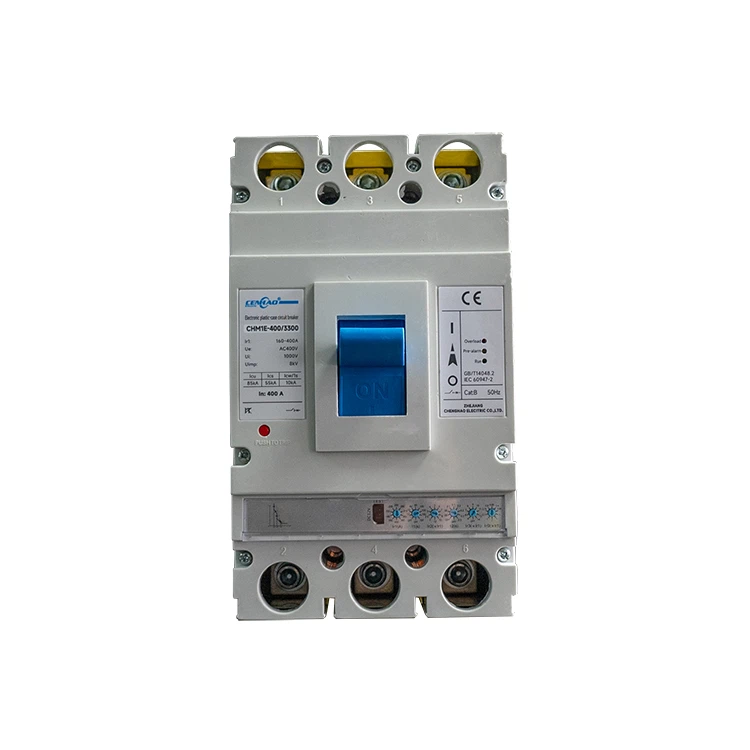
High-performance electronic circuit breakers, however, offer much higher accuracy and flexibility. The electronic measurement and control system can accurately detect even small changes in current. They can be programmed to have different tripping curves according to the specific requirements of the application. For instance, in a sensitive electronic equipment protection scenario, a high-performance circuit breaker can be set to trip quickly when a small overcurrent occurs to prevent damage to the equipment. In a motor protection application, it can be programmed to tolerate short-term overloads during motor starting.
Response Time
Response time is another crucial factor. Standard circuit breakers usually have a relatively slow response time, especially for small overcurrents. The bimetallic strip needs time to heat up and bend before tripping the breaker. In the case of short-circuit currents, the electromagnet needs to build up a sufficient magnetic field to operate. This can result in a delay of several milliseconds to seconds, depending on the magnitude of the fault current.
High-performance electronic circuit breakers can respond much faster. The electronic sensors can detect faults instantaneously, and the microprocessor can make a decision and send a tripping signal within microseconds. This rapid response is particularly important in applications where a fast interruption of the circuit is required to prevent serious damage, such as in high-voltage power systems or critical industrial processes.
Adjustability
Adjustability is an area where high-performance electronic circuit breakers have a clear advantage. Standard circuit breakers typically have a fixed rated current and tripping characteristic. Once they are manufactured, it is difficult to change these parameters. If the load requirements change, a new circuit breaker may need to be installed.
High-performance electronic circuit breakers, on the other hand, are highly adjustable. The rated current, tripping time, and other protection parameters can be easily adjusted through the programming interface. This allows for greater flexibility in different applications. For example, in a building electrical system, as the power consumption of different areas changes over time, the circuit breakers can be adjusted accordingly without the need for replacement.
Communication and Monitoring Capabilities
In today's digital age, communication and monitoring capabilities are becoming increasingly important. Standard circuit breakers generally do not have built-in communication functions. It is difficult to obtain real-time information about their operating status and fault history.
High-performance electronic circuit breakers are often equipped with communication interfaces, such as Modbus, Profibus, or Ethernet. These interfaces allow them to communicate with a central control system or a monitoring device. Through these communication channels, users can remotely monitor the current, voltage, and other electrical parameters of the circuit breaker, as well as its operating status. In case of a fault, the system can send an alarm signal, and the fault information can be recorded for further analysis. This helps in predictive maintenance and improves the overall reliability of the electrical system.
Cost
Cost is always a consideration when choosing a circuit breaker. Standard circuit breakers are generally more affordable. Their simple design and manufacturing process result in lower production costs. They are a cost-effective choice for applications where basic protection is sufficient, such as in residential electrical systems or small commercial buildings.
High-performance electronic circuit breakers, due to their advanced technology and features, are more expensive. The cost of the electronic components, microprocessors, and communication interfaces adds to the overall price. However, in applications where high accuracy, fast response, and advanced monitoring are required, the additional cost may be justified by the improved performance and reliability.
Application Scenarios
Based on the above differences, standard and high-performance circuit breakers are suitable for different application scenarios. Standard circuit breakers are commonly used in residential, small commercial, and some industrial applications where the load is relatively stable and the requirements for protection accuracy are not very high. For example, in a household electrical distribution board, standard circuit breakers can provide reliable protection against overcurrents and short-circuits.
High-performance electronic circuit breakers are preferred in applications where high precision, fast response, and advanced monitoring are essential. These include high-voltage power systems, data centers, industrial automation, and critical medical equipment. In a data center, a high-performance circuit breaker can quickly detect and isolate faults to ensure the continuous operation of the servers and prevent data loss.
Conclusion
In conclusion, the differences between standard and high-performance electronic plastic-case circuit breakers are significant. Standard circuit breakers offer basic protection at a lower cost, while high-performance circuit breakers provide higher accuracy, faster response, greater adjustability, and advanced communication and monitoring capabilities. When choosing a circuit breaker, it is important to consider the specific requirements of your application, including the load characteristics, protection accuracy, response time, and budget.
As a supplier of electronic plastic-case circuit breakers, we offer a wide range of products to meet different customer needs. Whether you need a standard circuit breaker for a simple application or a high-performance circuit breaker for a critical project, we can provide you with the right solution. If you are interested in our products or have any questions about circuit breaker selection, please feel free to contact us for a detailed discussion. We are committed to providing you with the best products and services to ensure the safety and reliability of your electrical systems.
References
- Electrical Engineering Handbook, CRC Press
- Circuit Breaker Technology and Applications, IEEE Press